
The challenge of large-scale hydration in the modern era has shifted from a simple matter of volume to a complex intersection of logistics, sustainability, and environmental stewardship. As global agencies, tourism bureaus, and federal park systems move toward plastic-free mandates, the operational requirements for delivering 1 million units of sustainable water have become a critical focal point for logistics managers and event coordinators alike. Pure Box Water represents a departure from the traditional plastic-heavy supply chain, offering a scalable solution that aligns with the rigorous demands of state and federal departments of natural resources.
The transition to a million-unit scale involves more than just a change in packaging; it requires a complete reimagining of the supply chain. By replacing standard Polyethylene Terephthalate (PET) bottles with high-capacity boxed spring water, organizations can significantly reduce their environmental footprint while navigating the intricate logistics of high-traffic tourism hubs and remote federal lands.
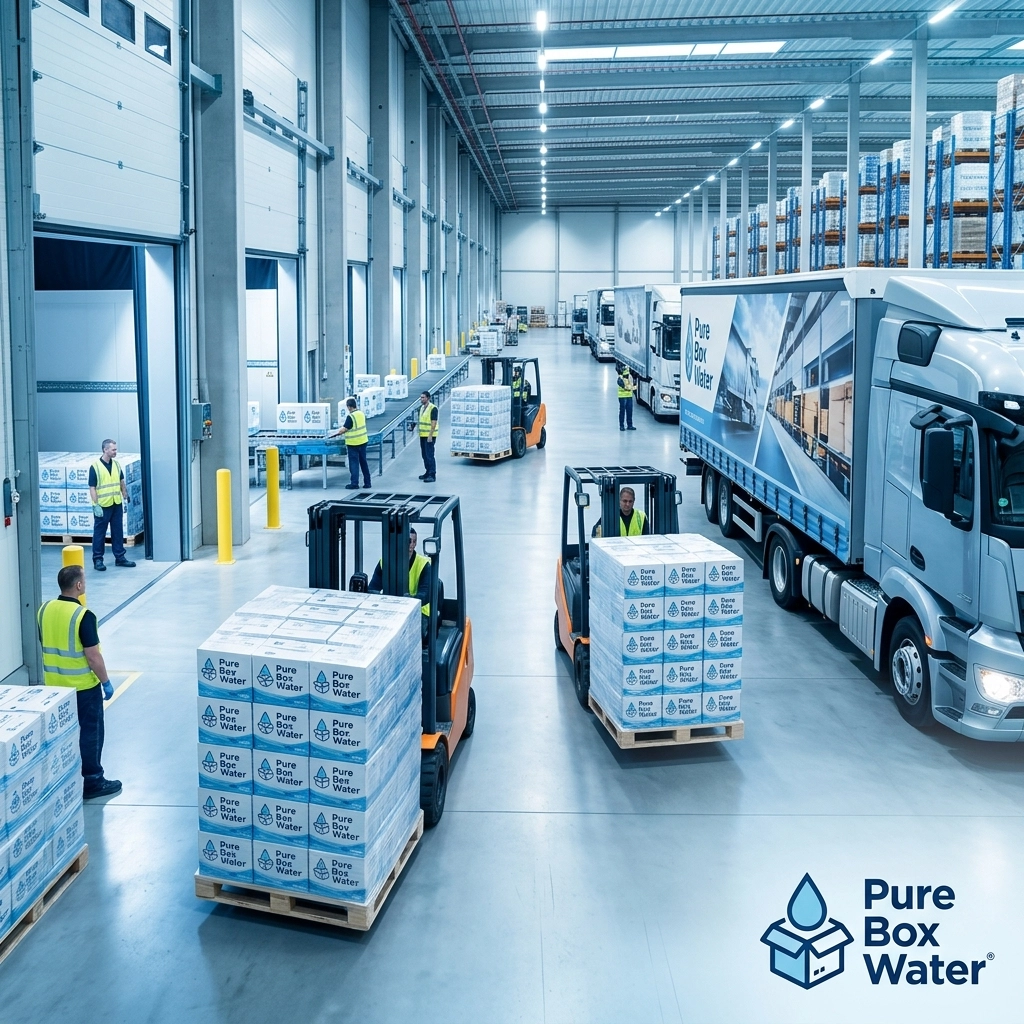
Efficiency in transportation is often dictated by the geometry of the cargo. Traditional plastic bottles, characterized by their rounded shapes, create significant "dead air" when palletized. This inefficient use of space results in more trucks on the road and higher carbon emissions per unit delivered. In contrast, the cuboid design of Pure Box Water allows for superior cube utilization.
Logistics managers overseeing the delivery of 1 million units benefit from increased stackability and pallet density. When units fit together with minimal gaps, the structural integrity of the pallet is enhanced, reducing the risk of product damage during long-haul transit to state parks or coastal tourism centers. This optimization ensures that more water is delivered per shipment, effectively lowering the cost-per-unit and the overall carbon intensity of the distribution network.

A realistic image of a high-efficiency logistics warehouse showing organized pallets of Pure Box Water. The scene features a clean, industrial environment with the Pure Box Water logo visible on the packaging. No text in the bottom right corner.
For agencies such as the Department of Natural Resources (DNR) or federal park services, the logistical challenge is compounded by geography. Delivering 1 million units of water to a concentrated urban event is vastly different from distributing that same volume across a network of remote campgrounds, trailheads, and visitor centers.
Sustainable logistics in these protected areas requires a "leave no trace" approach to the supply chain. Pure Box Water’s packaging is designed not only for easy transport into these sensitive ecosystems but also for simplified waste management upon exit. Unlike plastic bottles, which are prone to being caught in natural wind-flow or clogging local filtration systems, boxed water containers are easily flattened, significantly reducing the volume of waste that must be hauled out of the park. This reduction in waste volume directly translates to fewer garbage truck trips, further preserving the tranquility and air quality of the park environment.
Tourism bureaus are increasingly tasked with managing the environmental impact of millions of visitors. Whether it is a seasonal surge in a coastal town or a year-round attraction, the demand for portable hydration is relentless. Coordinating the logistics for 1 million units of sustainable water allows tourism boards to fulfill their "green" promises to the public while ensuring that local infrastructure is not overwhelmed by plastic waste.
By integrating Pure Box Water into the local supply chain, tourism bureaus can leverage centralized distribution hubs. These hubs act as the primary nodes for a million-unit rollout, allowing for a "hub-and-spoke" delivery model that serves various kiosks, hotels, and event venues. This organized approach prevents the chaotic, fragmented deliveries associated with multiple small-scale plastic vendors, streamlining the flow of traffic in high-density tourist zones.

A realistic aerial view of a sustainable hydration station at a major tourism landmark. The scene shows visitors using Pure Box Water units, with a clean and organized distribution setup. The Pure Box Water logo is clearly visible. No text in the bottom right corner.
The logistics of large-scale water delivery are now inextricably linked to media rights and corporate branding. As high-profile events move toward the "1 Million Unit Program," the packaging itself serves as a mobile billboard for sustainability. For event coordinators, the logistical feat of moving 1 million units provides a massive platform for sponsors who are committed to plastic-free initiatives.
The ability to deliver a consistent, high-volume supply of sustainable water allows media rights holders to integrate the product seamlessly into the event experience. From a logistics standpoint, this means that the product must be where the cameras are, at the finish lines, in the VIP lounges, and at the entry gates. Coordinating this "last-mile" delivery within a massive event footprint requires precise timing and a deep understanding of pedestrian flow, ensuring that hydration is available without obstructing the visual or operational aspects of the event.
The logistics of 1 million units begins at the source. Maintaining a sustainable supply chain involves rigorous oversight of the extraction and packaging processes. Pure Box Water utilizes spring water sourced with ecological sensitivity, ensuring that the local water table is not depleted during the high-demand cycles required to produce a million-unit batch.
The materials used in the boxed packaging, sourced from responsibly managed forests, are transported to the filling facilities using optimized routes. By tracking every stage of the journey, from the forest to the filling plant to the final delivery site, logistics managers can provide comprehensive sustainability reports. These reports are vital for federal and state agencies that must justify their procurement choices to both auditors and the public.

A realistic close-up of the Pure Box Water packaging showing the sustainable materials and the logo. The background is a blurred, natural spring environment, emphasizing the source of the water. No text in the bottom right corner.
The primary hurdle in moving 1 million units of sustainable water is often the inertia of existing plastic-based logistics. Many venues are built around the handling of plastic crates and PET recycling programs. Shifting to boxed water requires a recalibration of handling equipment and staff training.
However, the benefits of this shift are immediate. Logistics teams find that boxed water is easier to store in temporary structures, such as tents or trailers, where space is at a premium. The stackability of the boxes allows for higher vertical storage, freeing up ground space for other critical event operations. Furthermore, the absence of plastic shrink-wrap, often replaced by compostable or recyclable alternatives in the Pure Box Water system, removes another layer of waste logistics from the site.
Achieving the delivery of 1 million units of sustainable water is a powerful statement for any organization. It demonstrates that the logistics for large-scale environmental responsibility are not only possible but also efficient. For state parks, federal agencies, and tourism bureaus, reaching this milestone represents a tangible victory in the fight against plastic pollution.
The logistical framework established by Pure Box Water serves as a blueprint for future endeavors. By focusing on high-density packaging, optimized transport routes, and integrated waste management, the 1 Million Unit Program provides a scalable, repeatable model for sustainable hydration. As the world’s most prominent events and parks continue to phase out single-use plastics, the expertise gained in managing these massive volumes will be the defining factor in the success of the global sustainability movement.

A realistic image of a logistics manager reviewing a digital delivery map on a tablet, with a fleet of clean, eco-friendly delivery trucks in the background. The Pure Box Water logo is visible on the trucks. No text in the bottom right corner.
In conclusion, the logistics of delivering 1 million units of sustainable water require a sophisticated blend of traditional supply chain management and forward-thinking environmental strategy. By prioritizing cube utilization, remote-access planning, and circular-economy waste practices, Pure Box Water is enabling agencies to meet their hydration needs without compromising their ecological values. The path to a plastic-free future is paved with the precision and dedication of logistics professionals who recognize that scale and sustainability are not mutually exclusive, but rather, two sides of the same coin.
For more information on our initiatives and the technical specifications of our sustainable supply chain, please visit our official sitemap or explore our category pages to learn how we are transforming hydration for the next generation of global events.